
Every DIY project starts with an idea. Sometimes it’s a new set of shelves for the garage. Sometimes it’s replacing skirting boards, building outdoor furniture, refreshing a room, or finally tackling that project you’ve been planning for months. But before the first cut is made, there’s an important decision that can shape the entire outcome of your build, choosing the right tool.
Not all saws are designed to do the same job. Some are built for accuracy. Others prioritise speed. Some offer flexibility for detailed work, while others are designed to deliver repeatable precision across larger projects. Understanding what each saw is designed to do helps DIY users work smarter, improve cut quality and build confidence in the workshop. It can also make projects safer and more efficient by helping ensure you’re using the right tool for the right application.
If you’ve ever wondered whether you should reach for a jigsaw, circular saw or mitre saw, this guide breaks down what each tool does, why it matters and where it fits into your DIY toolkit.
The Jigsaw: Precision and Flexibility for Detailed Cutting
When DIY projects call for curved cuts, internal cut-outs or more detailed shaping work, a jigsaw becomes one of the most versatile cutting tools you can have in your workshop. Designed with a narrow vertical blade that moves rapidly up and down, jigsaws give users greater control when precision matters more than cutting speed.
Unlike larger saws that are designed primarily for long, straight cuts, a jigsaw allows DIY users to work around corners, navigate tighter spaces and create more intricate shapes across a variety of materials when paired with the correct blade. For newer DIY users, this flexibility often makes the jigsaw one of the more approachable saw types to learn. Good visibility of your cutting line, allowing the tool to do the work without forcing it, and choosing the correct blade for the material all contribute towards cleaner cuts and better results.
Whether you’re building, renovating or adding custom finishing touches to a project, a jigsaw helps bridge the gap between functionality and creativity.
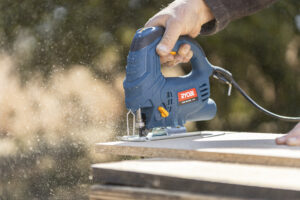 Think:
- Sink cut-outs in countertops
- Curved wooden features
- Decorative DIY projects
- Trimming laminate flooring
- Detailed woodworking applications
This is where the jigsaw earns its place in the workshop.
If you’re spending longer periods in the workshop or regularly working across different material types, corded performance can be a practical choice. Our JS-80 810W Jigsaw delivers continuous cutting power without the need to manage battery runtime, making it well suited to workshop-based projects or larger cutting tasks. Variable speed control helps users adapt to different materials, while features like the built-in laser and dust blower mechanism help improve line visibility when accuracy matters most.
But DIY projects do not always stay in one place. Sometimes you’re moving between work areas. Working outdoors. Installing rather than building.
That is where cordless flexibility starts becoming valuable. Our XJ-80 18V Cordless Jigsaw gives DIY users the freedom to move without extension leads becoming part of the job. Variable speed settings support different cutting applications, while orbital cutting action helps improve cutting efficiency. Tool-free blade changes and an ergonomic grip also help keep projects moving smoothly when convenience matters.
Pro Tip: Choose your blade before you choose your speed setting. Fine-tooth blades generally produce cleaner cuts in laminate or thinner materials, while more aggressive wood-cutting blades remove material faster. If you’re cutting curves, allow the saw to work at its own pace, forcing tight turns can reduce cut accuracy and shorten blade life.
The Circular Saw: Built for Speed, Power and Straight-Line Cutting
When larger materials need clean, consistent straight cuts, a circular saw becomes one of the hardest-working tools in a DIY setup. Using a rotating blade designed for fast material removal, circular saws help users cut timber, sheet materials and construction boards with speed and repeatability. Where jigsaws focus on flexibility, circular saws focus on productivity.
Long cuts across plywood sheets, trimming construction materials to size or preparing timber for larger builds becomes significantly easier when using the right tool for the job. Proper setup also plays an important role, selecting the correct blade, supporting materials correctly and adjusting cutting depth all help improve cutting quality and overall control.
For DIY users taking on renovation projects, outdoor builds or workshop upgrades, a circular saw often becomes one of the most frequently used tools in the collection.
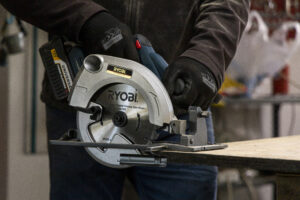 Think:
- Cutting plywood sheets
- Decking builds
- Timber framing
- Shelving projects
- Construction materials
- Large woodworking jobs
This is where the circular saw proves its value.
For workshop users tackling larger cutting volumes or extended project sessions, corded performance often provides added convenience. The RCS-1500 Circular Saw combines ergonomic handling with practical features like bevel adjustment and depth control, helping users adapt to different cutting applications more easily. Features like the spindle lock also simplify blade changes, helping keep downtime to a minimum.
Not every project, however, happens close to a power source. Outdoor builds, site work and projects that require movement between spaces can all benefit from cordless flexibility. Our XBCS-185 18V Brushless Circular Saw delivers portability alongside cutting capability, helping DIY users maintain productivity without managing extension leads. Features like bevel cutting capability and a heavy-duty motor help provide versatility across different project types.
Pro Tip: Adjust blade depth so only a small portion of the blade extends below your material. Too much exposed blade can reduce control and increase tear-out. For cleaner cuts in plywood or laminated boards, ensure your material is properly supported before cutting and use a blade suited to the finish you want to achieve.
The Mitre Saw: Precision Cutting Where Accuracy Matters Most
Some projects leave very little room for error. Flooring installation. Trim work. Furniture building. Framing. When repeatable accuracy becomes important, a mitre saw provides the consistency that handheld cutting tools can struggle to achieve. Designed specifically for controlled crosscuts and angle cuts, mitre saws help DIY users produce cleaner, more uniform results across projects where fit and finish matter.
Whether creating matching timber lengths, cutting precise angles for trim installation or working through repetitive cutting applications, the tool is built around accuracy and efficiency.
For DIY users growing their workshop capability, a mitre saw often becomes the difference between “close enough” and professional-looking results. Correct setup, stable workpiece support and careful measurement all contribute towards cleaner cutting outcomes while improving confidence during use.
 Think:
- Accurate angle cuts
- Repetitive cutting applications
- Timber framing
- Finishing work
- Precision woodworking
This is where the mitre saw comes into its own.
For larger workshop projects or repetitive cutting applications, corded performance often supports uninterrupted workflow. The MS-210SCL 1700W Sliding Compound Mitre Saw is designed around cutting accuracy, combining a dual slide rail system with laser guidance to help improve precision across repeated cuts. Features like extension supports and easy-to-read scales also help DIY users maintain greater consistency throughout a project.
Flexibility still matters. For projects that move beyond the workshop, cordless capability can make setup easier and improve mobility around the work area. The XCSS-210 18V Cordless Sliding Mitre Saw combines portability with substantial cutting capacity, while features like the laser liner and LED work light help improve visibility in varying environments.
Pro Tip: Always make a test cut on scrap material before moving onto final pieces, especially when working with trim or angle cuts. Supporting longer materials properly can also improve accuracy and help reduce movement while cutting, resulting in cleaner and more consistent finishes.
So Which Saw Should You Choose?
1. Choose a Jigsaw if you need:
- Curves
- Detailed shaping
- Internal cut-outs
- Flexible cutting applications
2. Choose a Circular Saw if you need:
- Straight cuts
- Faster material processing
- Sheet material cutting
- General construction work
3. Choose a Mitre Saw if you need:
- Precise angle cuts
- Repetitive cutting applications
- Trim and finishing work
- Consistent crosscuts
The reality is that many DIY workshops benefit from having more than one option available. Each tool solves a different challenge. Understanding where each saw performs best helps you make better decisions, achieve cleaner results and build projects with greater confidence.
Because the right tool does more than make the job easier. It helps you do your best work.