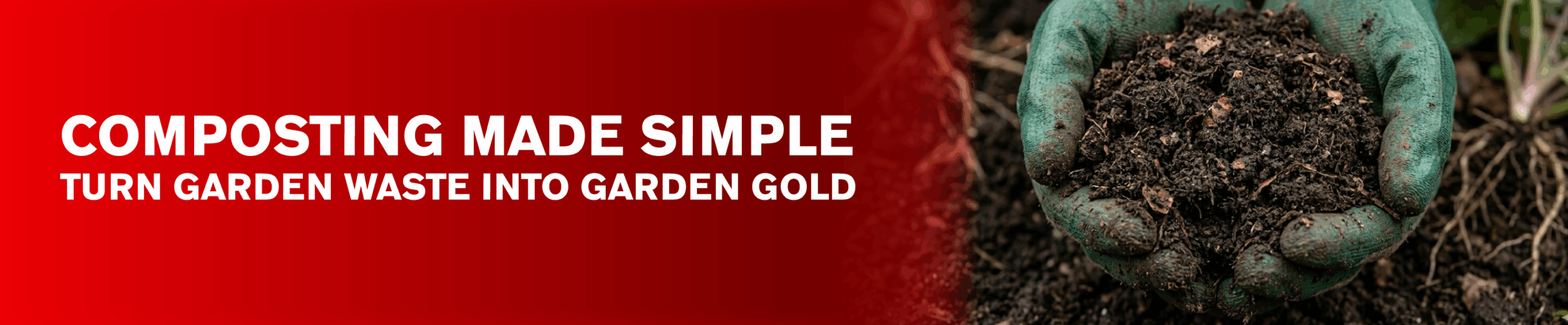
The Secret Life of Your Garden Waste
We’ve all been there: after a weekend of pruning and mowing, you’re left with a mountain of branches, a sea of leaves, and enough grass clippings to fill a small stadium. Usually, this ends up in plastic bags on the curb. But what if I told you that you were throwing away the most expensive fertilizer your garden will ever need?
Nature doesn’t waste anything. In the wild, fallen leaves and dead wood break down to feed the roots below. By using a mulcher, you’re simply speeding up that process. Let’s look at how to turn your garden cleanup into an eco-friendly win.
Meet Your Composting Co-Pilots
Getting that nutrient-dense, crumbly mulch doesn’t happen by accident; it requires a structured approach to how you process your organic material. Think of it as preparing a meal: you need the raw ingredients, but it’s the preparation that unlocks the flavour.
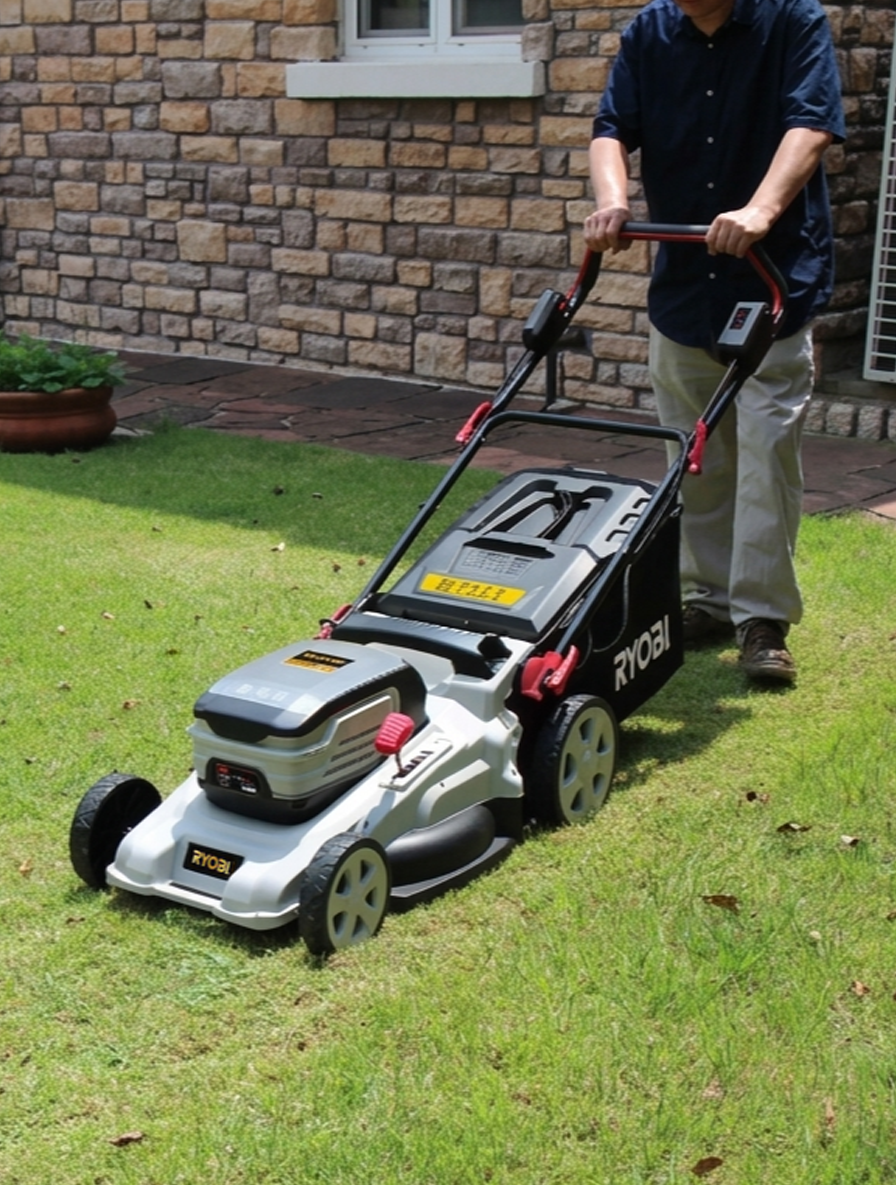 The workflow begins on the lawn. When you deploy our XBSM-510PLUS 36V Scissor Mower, you’re not just cutting grass – you’re harvesting vital nitrogen-rich material that your mulch pile needs to thrive. Its precise 510mm cutting path and brushless motor work together to produce extremely fine clippings, small enough that the microbes in your soil can break them down almost immediately. Think of these clippings as the fuel that kickstarts the whole decomposition process. As a general rule, try to mow before your grass gets too long. Shorter, more frequent cuts produce finer clippings that integrate far better into your mulch. It’s a small habit that makes a big difference to the quality of your end result.
However, a successful mulch requires structure and air, which is where the textures come in. Before processing, you have to shape your bushes, hedges and shrubs. That is where a trimmer or shear comes in and our XHS-18 18V Pruner and Hedge Shear is essential for that meticulous, overhanging growth. Remember that these prunings aren’t waste; they provide critical texture. Because these pieces are uniform, they ensure your mulch mix doesn’t compress, allowing necessary oxygen to permeate the stack. When pruning, aim for pieces around 5–10cm. These chunkier bits create natural gaps between finer material, letting air circulate and moisture distribute evenly. Without them, your mulch can mat into a dense layer that suffocates the very soil it’s meant to protect. Try alternating layers of fine clippings and coarser prunings as you build your pile; mulch will break down faster and do a far better job of feeding your garden.
Pro Tip: When mowing and trimming, pick a dry day and work in regular, smaller sessions rather than waiting until everything is overgrown. Lighter loads mean finer clippings and cleaner cuts, with far less strain on your tools.
Then, there’s the inevitable ground clutter that suffocates the soil. The resolution isn’t a tedious rake, but our RBV-3350 3000W Blower Mulching Vacuum. This unit vacuums scattered leaf matter and instantly renders it down at a high ratio. This is crucial: whole, dry leaves often repel moisture and can blow across the yard, whereas processed leaves lock together, stay put, and decompose exponentially faster. It also means you can cover a large area quickly, making what used to be an afternoon chore something you can knock out in under an hour. All that collected material goes straight into your mulch pile, ready to work.
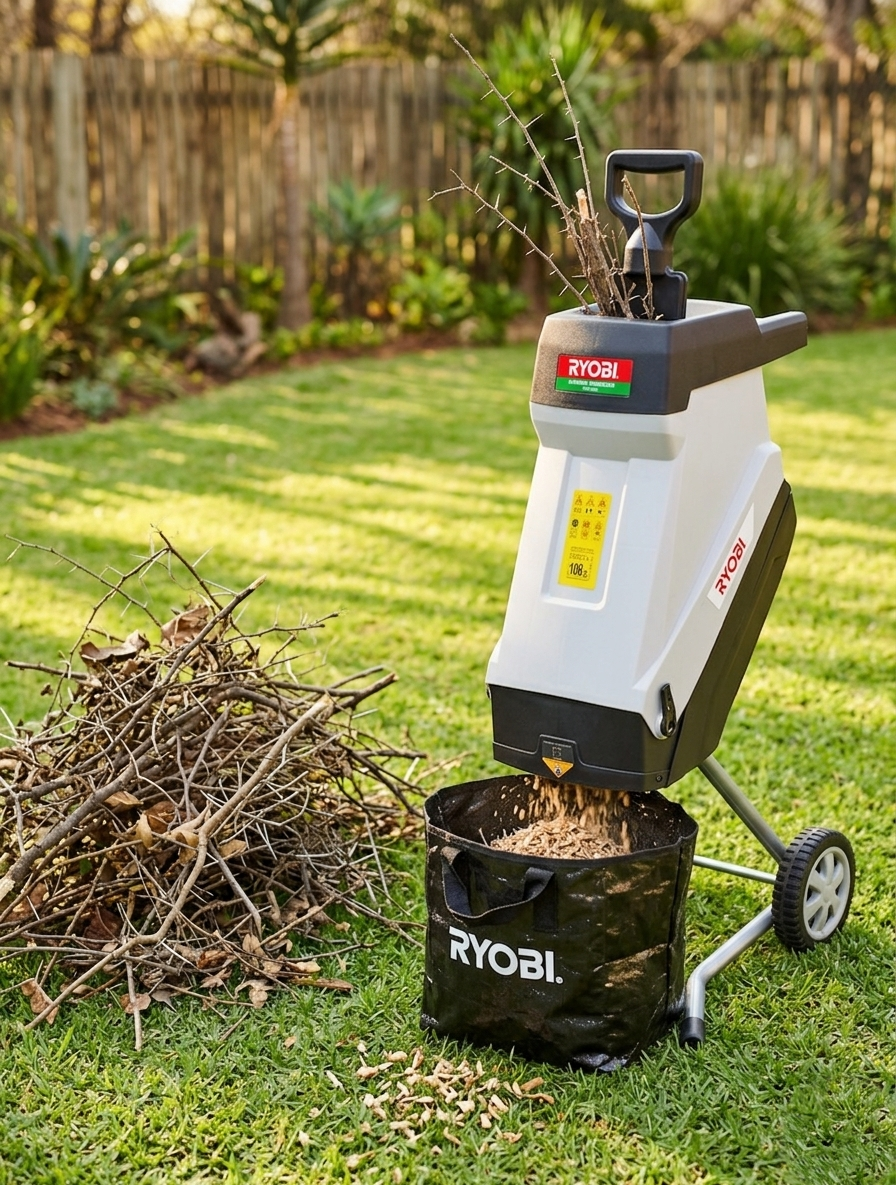
Finally, you address the substantive, woody material – the thick branches that always seem destined for the dump. This is where our RGS-2540 2500W Shredder becomes indispensable. As the workhorse of this system, it takes that bulky, thorny brush and transforms it into uniform, valuable woodchips, depositing them neatly into its 40L container. By processing this heavy carbon source into manageable chips, you ensure they mix perfectly with your fine grass clippings, creating a balanced, aerated environment that breaks down cleanly and smells earthy, rather than decaying.
Woodchips act as a natural moisture barrier when spread across your beds, reducing how often water is needed. The kind of material that used to cost money to buy, and you’re making it for free from what your garden produces.
Pro Tip: When vacuuming and shredding, dry conditions make all the difference. Wet leaves and damp branches strain motors, clog mechanisms, and produce clumpy, odour-prone mulch. Dry material processes quickly and gives you a clean, earthy end result.
What to Do with Your “Garden Gold”?
Once you’ve used your RYOBI tools to shred your waste, you have three fantastic options:
- Direct Mulching: Spread your shredded leaves and woodchips directly onto your flower beds. This prevents moisture evaporation (essential for our SA sun!) and stops weeds from germinating.
- The Compost Heap: Mix in a 1:3 ratio: 1 part grass clippings (greens) to 3 parts shredded branches (browns). Turn it every few weeks, and by next season, you’ll have black, crumbly soil.
- Pathways: Use the coarse chips from the RGS-2540 to create natural, eco-friendly garden paths.
Why this Matters?
Here’s the thing nobody tells you about composting: it’s less about effort and more about patience. You’re not fixing your garden in a weekend; you’re starting a conversation with your soil that gets better every season.
The leaves you shred today become next year’s healthier growth. The branches you chip become the pathways your kids run down in summer. The grass clippings you once bagged and discarded become the nutrients that feed everything back again.
Nothing leaves your garden without the chance to return as something better.
That’s the real secret life of garden waste. And now, you’re part of the cycle.